30 June 2026
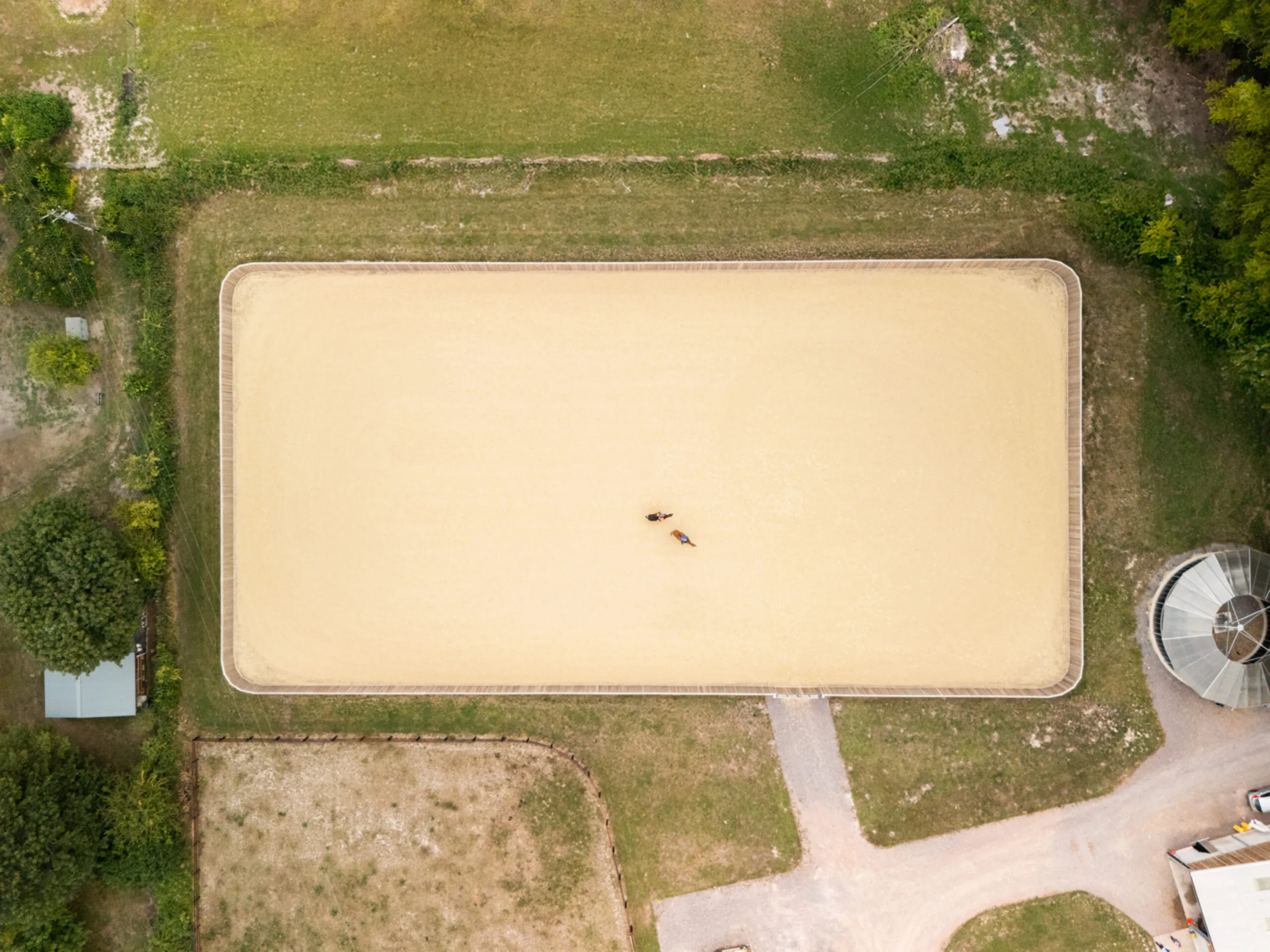
Most equestrian arenas appear similar from afar: a rectangular shape, post and rail fencing, and a layer of surface material. To those passing by, one arena looks much like another. However, spend time on a poorly constructed one, and the differences quickly become clear. The surface becomes unpredictable, water pools after rain then dries unevenly, one corner feels heavy underfoot, while another feels dead and flat. The horse compensates, and so does the rider.
We have built equestrian arenas across southern England for six years. The difference between a good arena and a great one is not solely about budget; it depends on whether the contractor understands how the layers interact: sub-base, separation layers, drainage, and surface. Get any one of these wrong, and it impacts everything above it. When they are correctly installed, the arena performs well for years with minimal maintenance.
Sub-base: where most problems start
The sub-base serves as the structural foundation of the arena. It bears weight, allows water to drain through, and influences the long-term shape of the riding surface. We specify 150mm of 20-40mm clean hard stone (carboniferous limestone or granite), machine-laid and compacted to create a level formation. Using clean, hard stone at this grading is essential because it ensures good drainage and does not break down over time. Type 1 MOT, commonly used in general construction, contains fines that bind together and hinder water flow. In an arena, this results in water pooling in the sub-base rather than draining away properly. The common shortcut is to skimp on compaction or to use the wrong aggregate. Both create the same problem: the sub-base to settle unevenly over time, and the surface then follows. Riders often notice this as soft spots, usually in the corners and along the centre line where heavy traffic is heaviest. By the time it is visible, the fix involves stripping the surface, re-grading, and re-compacting, which typically requires the arena to be out of use for several weeks. We laser-level every sub-base before laying any surface; this is the only way to ensure the stone is within tolerance before it is buried.
Why we build level, not on a camber
Some contractors build a crossfall into the sub-base to direct surface water to the edges. This is a common approach, but it introduces a problem: the horse is constantly working on a slope. On a 20m wide equestrian arena with even a 1% camber, one side can be approximately 200mm lower than the other. This causes the horse to load unevenly on each rein, and the surface depth varies across the width unless it has been carefully adjusted for. Over time, the lower side compacts differently and feels heavier. We prefer to build our arenas level. The water doesn’t run sideways across the surface because it drains vertically, down through the surface material, then the sub-base stone, and into a drainage network. The sub-base stone is open-graded specifically so water passes through rather than sitting on top. Two layers of geotextile separate the system. A 300gsm membrane with welded joints sits between the sub-base stone and riding surface, preventing the sub-base from migrating into the surface. A lighter 100gsm geotextile lies beneath the stone to prevent soil fines from rising. Both layers are essential for structural stability. Removing either one can cause the arena’s performance to decline within a few seasons.
Drainage: the system underneath
Below the sub-base is the drainage network. We use 100mm perforated pipe laid in trenches backfilled with 10-20mm clean stone. The pipe collects water that passes vertically through the riding surface and the sub-base above, carrying it to an outfall. The layout, spacing, and outfall capacity are all specific to each site. Soil percolation rates, the local water table, and a realistic assessment of where the water actually drains are more important than following a standard template. We have been called to equestrian arenas where the drainage was technically correct but the outfall had been connected to a field drain already at capacity. The arena flooded every winter. The purpose of designing the drainage properly is to enable the arena to be built level.
Surface specification: not one size fits all
The surface is the part riders care about most, and it is the part that generates the most debate. Silica sand, fibre-sand blends, waxed surfaces, and synthetic combinations all have different characteristics. We specify 125mm of surface material as standard, though the exact product depends on the discipline, the frequency of use, and the maintenance regime the client will realistically commit to.
A dressage arena ridden twice a day needs a surface that maintains its structure without becoming compacted. A showjumping arena used for training and schooling requires more give and a quicker recovery after impact. An all-weather surface for a busy competition yard must withstand heavy use and variable conditions without becoming inconsistent.
We collaborate with surface suppliers to identify the right product for each use case. Sometimes, this involves recommending a different surface from the one the client initially considered. It’s worth having that conversation early because a surface unsuitable for the discipline will never ride well, regardless of how well everything underneath it has been constructed.
Why it matters
None of these failures are visible on day one. An arena can look fine in August and reveal its problems in November. By the time they become obvious, the cost of fixing them is significant. The difference between building an equestrian arena and building the right arena comes down to whether the contractor understands the system as a whole. Surface, geotextile separation, sub-base stone, drainage. Each layer has a specific role and must be specified together. If you are planning a new arena or reviewing issues with an existing one, we are happy to talk it through.
More News
Posted 11 May 2026 in Arenas , Equestrian
Posted 7 April 2026 in Arenas , Equestrian