7 April 2026
Outdoor arena construction looks simple when it’s finished: a tidy rectangle, smart fencing, and a surface that rides well. The performance, though, comes from what’s underneath: drainage, base stone, membranes and good groundworks. Get those right and an arena stays consistent for years. Get them wrong and you’ll eventually be dealing with puddles, deep spots and a surface that never feels the same twice.
Tomley Projects builds outdoor arenas UK-wide. We’re known for quality of build, speed, honesty and reliability. This guide shows you what “built properly” actually means.
The skim-read version
- We normally build outdoor arenas flat for consistent going.
- The drainage underneath has the fall to carry water away.
- Laterals are typically at 5m centres, discharging to a purpose-built soakaway or approved drainage network.
- The base must be clean, hard, free-draining stone — wrong stone is often a long-term failure point.
- Membranes stop layers mixing and protect drainage performance.
- Most common surfaces: sand & fibre and waxed sand & fibre.
Site choice
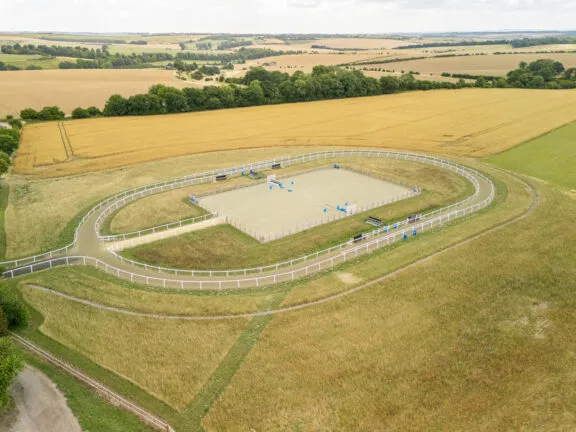
When considering the location for an outdoor arena, we like:
- firm ground with clear outfall options
- good access to the site
- space around the arena, especially distance from mature trees
We avoid (or design around):
- low spots
- run-off flowing towards the arena
- tight access
If you’re unsure, check the area after heavy rain. Water tells you what you need to know.
Is your site suitable?
We can build an outdoor arena on most sites, but cost and performance depend on ground conditions and access.
Still not sure? Email us, and we can advise.
Setting out and levels
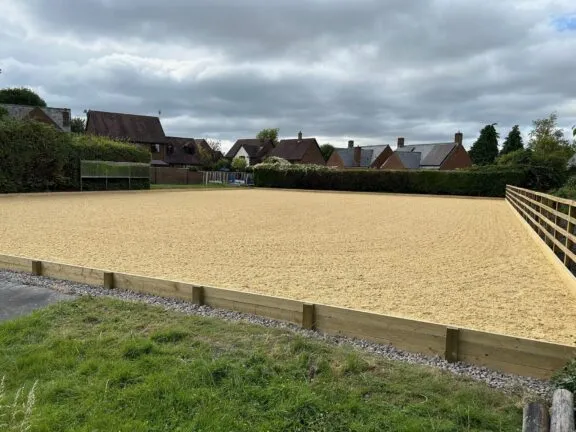
Before excavation, you need:
- footprint (including fencing and gates)
- finished surface level
- drainage plan (laterals + outfall)
Flat vs fall
We normally build the outdoor arena surface flat. Ordinarily, the drainage pipework carries the fall below, but rare cases we’ve introduced a very small surface fall, although this isn’t standard.
Groundworks (the foundation)
Topsoil isn’t structural. Strip it, then build on firm ground.
Typical sequence:

Strip and stockpile topsoil

Cut/fill and shape the area

Remove soft spots properly

Form the subgrade

Compact in passes
If the formation is weak or uneven, you’ll chase uneven depth for the life of the arena.
Drainage
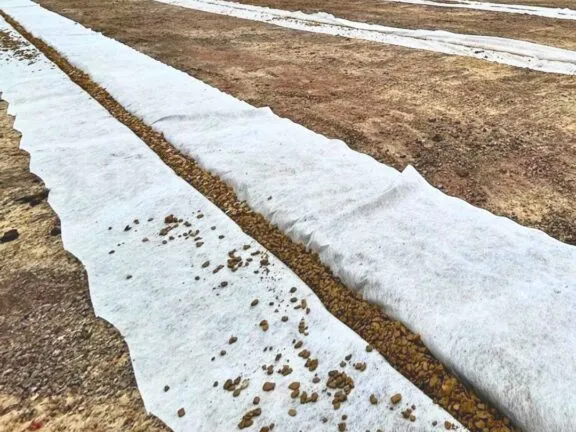
Drainage is the difference between “usable” and “flooded”, and what makes winter riding in an outdoor arena possible.
Our typical approach:
- laterals at 5m centres
- connected to a purpose-built soakaway or approved drainage network
- 100mm perforated land drain surrounded by 10–20mm clean stone
Two essentials:
-
- a proper outfall that stays open year-round
- clean, graded stone (fines clog systems)
Not sure if your site will drain well?
Send your postcode and a few photos to enquiries@tomleyprojects.com and we’ll give you a straight steer on what looks simple, what looks tricky, and what matters most.
The layers
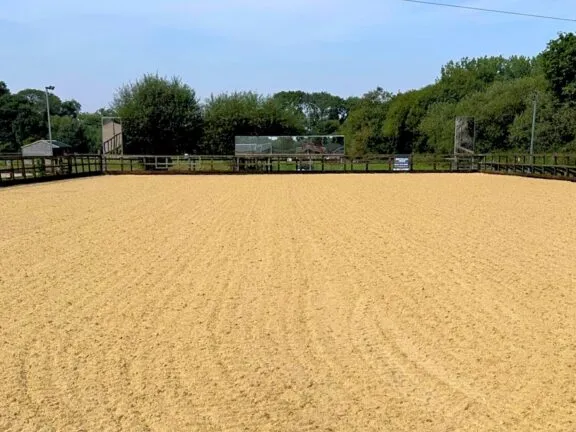
Outdoor arenas last when layers stay clean, separate and free-draining.
- Formation: shaped and compacted subgrade
- Lower geotextile: stops stone migrating into the ground
- Base stone: clean, hard, angular, free-draining
- Upper geotextile: stops the surface contaminating the base
- Riding surface: installed to consistent depth and level
Surface choice
The outdoor arena surface is what you feel, but it won’t perform without the right base and drainage.
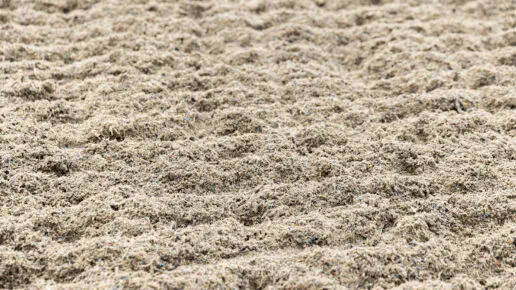
Sand & Fibre
- strong all-rounder for mixed use
- needs consistent depth and regular levelling
- moisture management matters
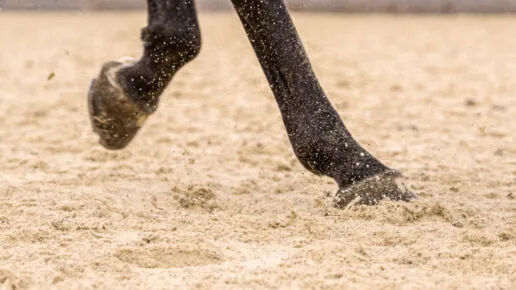
Waxed Sand & Fibre
- more consistent feel through the seasons
- typically lower dust
- needs the right maintenance routine
Fencing and edges
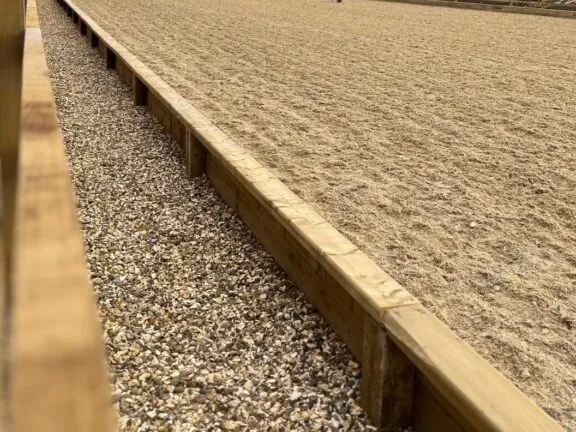
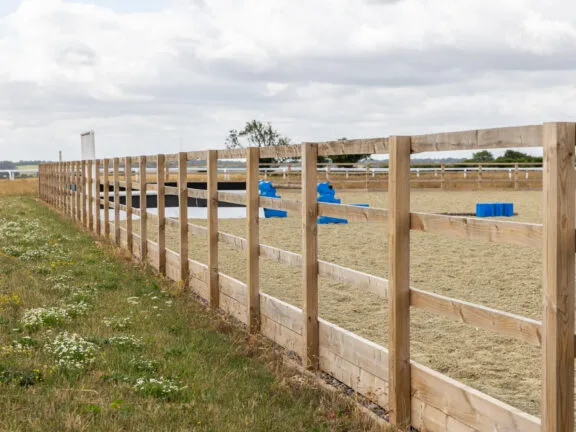
Edges are where surfaces creep and contamination starts.
A good outdoor arena perimeter:
- contains the surface
- protects the base from contamination
- improves safety
- keeps the arena looking sharp
Kickboards matter, they’re not just cosmetic.
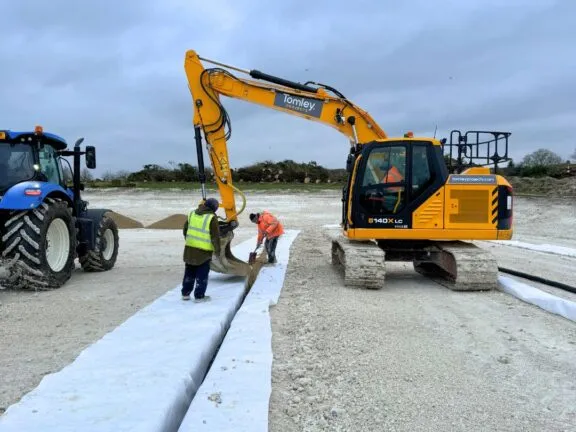
The most common fix we’re called in for
The main outdoor arena fix we are called in to resolve is poor drainage caused by incorrect base stone. It often takes years to show up, but then performance drops fast. A proper fix usually means:
- remove the surface, membrane, and a layer of existing stone
- replace with correct hard, free-draining stone
- install a new membrane
- reinstall the surface
This is exactly why we’re strict on specifications from day one.
Maintenance
Our simple rules for outdoor arena maintenance:
For low usage arenas, harrow at least once a week.
For high usage arenas, harrow daily.
To avoid compacted layers, vary harrow depth each time, and use different harrowing patterns.
We provide an Arena Maintenance Guide at handover, which you can also download below. We can also return for annual maintenance visits (chargeable extra).
Costs and Warranties
Costs vary by site, access, drainage requirements and surface choice. We’ll cover pricing in more detail in a dedicated “How much does an arena cost?” article.
Most arenas take 3–6 weeks on site, depending on weather, ground conditions, access and scope. We work fast, but never at the expense of doing the foundations and drainage properly.
As standard, we provide a 1-year warranty for peace of mind.
What to check in a quote
- Drainage + outfall: layout, spacing, and where water discharges
- Pipe + surround: pipe size and clean stone spec
- Base stone: depth and specification (clean, hard, free-draining)
- Membranes: spec/weight, overlaps/welded seams, edge fixing
- Surface: type and installed depth, plus installation method
Outdoor Arena Builds: Frequently Asked Questions
Site assessment, groundworks, drainage, clean base stone, separation membranes, surface installation, edging/fencing and a maintenance plan.
Yes. UK rainfall makes drainage essential for winter use and long-term performance.
It depends on the site. Our typical approach is 5m centres.
Normally flat. The fall is carried in the drainage pipework below.
Clean, hard, angular, free-draining stone. Wrong stone is a common long-term failure point.
They stop layers mixing, which protects drainage performance and consistency.
Both can be excellent. Waxed is typically more consistent and lower dust; sand & fibre is a strong all-rounder. Both rely on a good base.
Usually 3–6 weeks on site, depending on conditions and scope.
Weekly for low use, daily for high use. Vary the depth to avoid compacted layers.
Often due to incorrect base stone or gradual contamination, which reduces drainage.
Drainage and outfall, pipe and stone surround, base stone spec/depth, membrane details, and surface type/depth.
We can build an outdoor arena on most sites, but cost and performance depend on ground conditions and access.
- Outfall: Is there somewhere for water to go (soakaway/approved drainage)?
- Winter wetness: Does the area hold water after heavy rain?
- Access: Can wagons and plant reach the site easily?
- Trees: Are mature trees close enough to cause roots/shade/leaf litter issues?
- Space: Is there room around the outdoor arena for tidy edges and maintenance?
Still not sure? Email us, and we can advise.
More News

Posted 30 June 2026 in
Posted 11 May 2026 in Arenas , Equestrian